
Emideltide (DSIP)
Some nights you lie there doing the math: if I fall asleep right now, I get five hours. Then four. Then three. Sleep meds either knock you out and leave you groggy the next day, or they stop working after a few weeks and you're back where you started. If you're coming off opioids, it's worse. Your body is screaming at you and sleep feels like something that happens to other people. That kind of exhaustion changes who you are, and "just try melatonin" isn't an answer anymore.
DSIP is one of the compounds people ask us about when they're in that spot. Here's an honest look at what it is, what the research is actually exploring, and how we'd approach it at Doctor Springs.
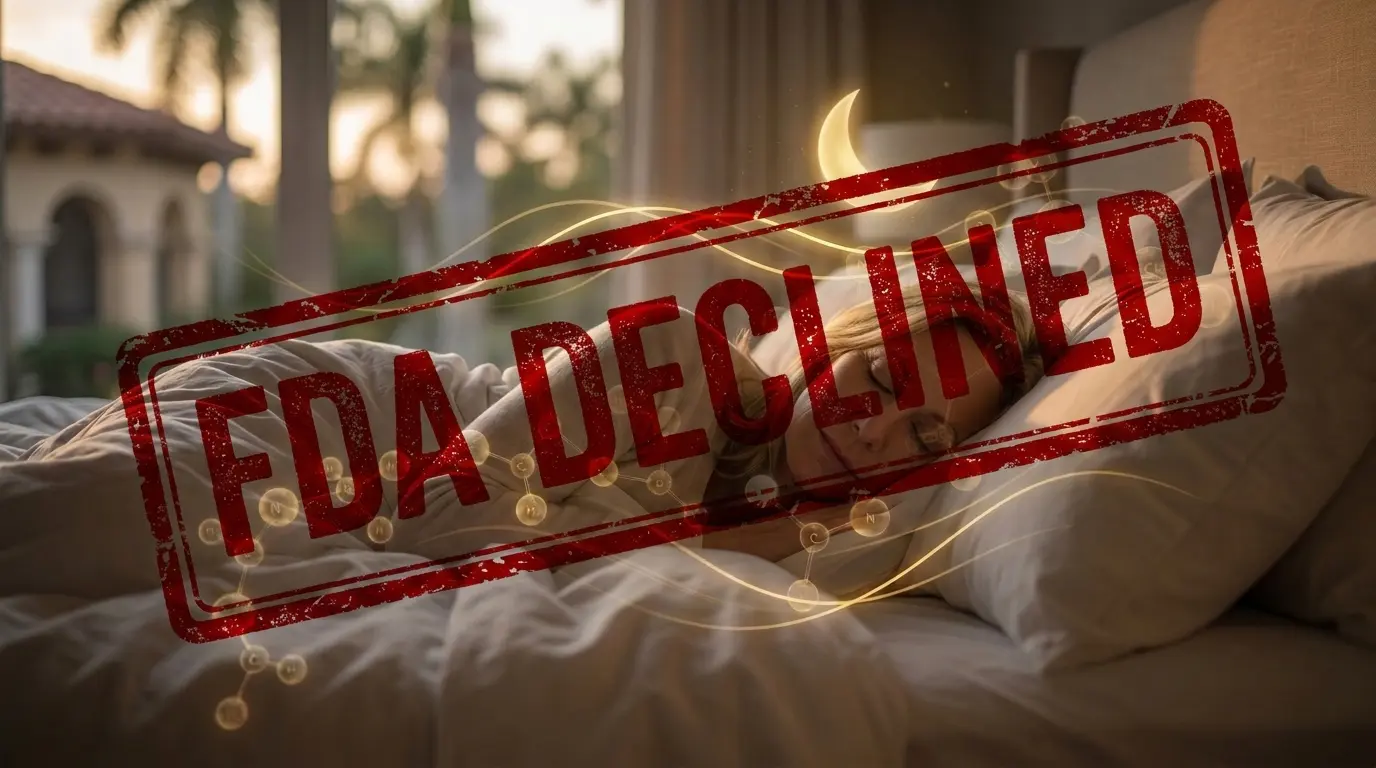
Update: an FDA advisory panel declined DSIP on July 24, 2026
Here's the most current news, and it matters. On July 24, 2026, the FDA's Pharmacy Compounding Advisory Committee reviewed seven peptides and voted on whether each should be added to the 503A list of bulk substances that compounding pharmacies are allowed to use. Six of them got the panel's backing. DSIP, listed under its compounding name Emideltide, was the only one the committee declined to recommend, and it came down to a narrow split vote with one abstention.
There's a wrinkle worth knowing. The FDA disclosed that the Emideltide nomination had actually been withdrawn, and that the agency was evaluating the peptide at its own discretion, which visibly frustrated some panel members and factored into the rejection.
One thing to keep straight: this was an advisory recommendation, not a final FDA ruling. The committee advises; the FDA still decides through a formal rulemaking process that realistically stretches into 2027. But the practical signal is hard to miss. DSIP did not get the panel's support, and it stays investigational and unapproved. If anything, that makes the case for caution and physician oversight stronger, not weaker.
What DSIP actually is
DSIP stands for Delta Sleep-Inducing Peptide, a small nine-amino-acid peptide first isolated from rabbit brain tissue back in the 1970s. Researchers named it for what it appeared to do: promote the slow, deep "delta wave" brain activity associated with restorative sleep. You may also see it listed under its compounding name, Emideltide.
Let's be direct about where things stand. DSIP is investigational. It is not approved by the FDA to treat, cure, or prevent insomnia, opioid withdrawal, narcolepsy, or anything else. And as of July 2026, an FDA advisory panel declined to recommend it for pharmacy compounding, the only one of seven peptides it turned down (more on that above). This page describes what the science is exploring, not a promise of what it will do for you.
What the research is exploring
Most of the human data on DSIP is decades old, out of Russia and Eastern Europe, plus a handful of small Western trials. Researchers have focused on three areas. In opioid withdrawal, older studies reported that DSIP eased somatic withdrawal symptoms in most patients treated, with effects showing up quickly. In chronic insomnia, it's studied for whether it can support the body's own sleep architecture rather than sedating you into unconsciousness. In narcolepsy, the interest is newer and thinner, built on DSIP's possible role in stabilizing a sleep-wake cycle that narcolepsy throws off balance.
That's real, and it's also limited. The strongest studies are small, old, and haven't been repeated to modern trial standards. We're not going to dress that up as more than it is.
How we'd approach it at Doctor Springs
We don't hand you a vial and a dosing chart off the internet. Any conversation about DSIP starts with Dr. Julia Springs reviewing your history, your medications, your labs, and what's actually going on with your sleep or your recovery. If it makes sense for you, it's prescribed and monitored by a physician, with follow-up built in to see how you're actually responding, not just how you hope you're responding.
That's the line between a considered medical decision and ordering research-use-only powder online and guessing at a dose. Your care stays individualized, documented, and supervised, start to finish.
Is it right for you?
Maybe, maybe not. DSIP isn't a first-line option, and it doesn't replace evidence-based treatment for insomnia, opioid use disorder, or narcolepsy, all of which have established care pathways for a reason. It might be worth a conversation if you've already worked through standard treatment with your doctor, you're still struggling, and you want to understand whether an investigational option could reasonably fit into a broader, supervised plan. That's a decision made in an exam room, not on a supplement website.
Common questions about DSIP
What is DSIP?
DSIP, or Delta Sleep-Inducing Peptide, is a nine-amino-acid peptide studied since the 1970s for its possible role in deep sleep, stress response, and opioid receptor activity. It's also known by its compounding name, Emideltide. It's investigational and not an approved medication.
Is DSIP FDA approved?
No. DSIP has not been approved by the FDA for insomnia, opioid withdrawal, narcolepsy, or any other condition. And on July 24, 2026, an FDA advisory committee declined to recommend DSIP for pharmacy compounding, the only one of seven peptides it turned down. That was an advisory recommendation rather than a final ruling, but it is not an approval, and it did not go DSIP's way.
Is DSIP safe?
Older studies described it as generally well tolerated, but modern, large-scale human safety data barely exists. Regulators have flagged theoretical concerns like immune response and unknown effects in pregnancy. That's why this belongs under physician supervision, not self-directed use.
What are the side effects of DSIP?
Reports in the literature mention mild, transient effects such as headache, nausea, dizziness, or daytime grogginess. Because the human research base is small and old, a complete side-effect profile hasn't been established. Anything new or concerning goes straight to your physician.
How is DSIP taken?
In research and clinical use it's typically given by subcutaneous injection, usually timed before bed for sleep-related use. At Doctor Springs, the route, dose, and monitoring would be determined by your physician based on your situation, not by a protocol you found in a forum.
Does DSIP help with opioid withdrawal?
It's one of the more studied uses historically, with older trials reporting reduced somatic withdrawal symptoms in most patients treated. That data is real but dated and limited in scale. DSIP is not an approved withdrawal treatment and would never replace an established, supervised detox protocol.
Does DSIP help with insomnia or narcolepsy?
Insomnia is the condition DSIP is most associated with, studied for its potential to support natural sleep architecture rather than sedate you. Narcolepsy research is newer and thinner, based on DSIP's possible role in sleep-wake regulation. Neither use is proven or approved, and both are still early research questions.
How long does DSIP take to work?
There's no reliable, established timeline in humans, and anyone who gives you a firm number is guessing. Response would need to be tracked individually with your physician rather than assumed from an online chart.
Reserve a Consultation
Related Services
Office Hours
| Monday | 9 AM to 6 PM |
| Tuesday | 9 AM to 6 PM |
| Wednesday | 9 AM to 6 PM |
| Thursday | 9 AM to 6 PM |
| Friday | 9 AM to 5:30 PM |
| Saturday | 12 PM to 2 PM |
| Sunday | Closed |

Doctor Springs
400 N Ashley Dr Ste 1900
Tampa, FL 33602
(813) 485-5954
Fax: (813) 790-7452